

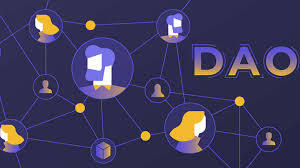

DAOs in Business Governance is evolving. Traditional corporate structures — with centralized boards, executive hierarchies, and shareholder voting — have dominated for decades. But in 2026, a new model is steadily gaining traction: Decentralized Autonomous Organizations, better known as DAOs.
DAOs in Business Governance
Powered by blockchain technology and smart contracts, DAOs are redefining how decisions are made, funds are allocated, and organizations are governed. What began as a crypto-native experiment is now influencing startups, investment funds, nonprofits, and even mainstream corporations.So, what role are DAOs playing in modern business governance — and how far can they go?
What Is a DAO?
A DAO (Decentralized Autonomous Organization) is a blockchain-based entity governed by smart contracts and community voting rather than centralized leadership.
Most DAOs operate on networks like Ethereum, where rules are coded into smart contracts. Members typically hold governance tokens that grant them voting rights on proposals such as budget allocation, partnerships, or protocol upgrades.
Unlike traditional companies, decisions in a DAO are transparent and recorded on-chain.
How DAOs Differ from Traditional Governance
Traditional corporate governance involves:
- A board of directors
- Executive leadership
- Shareholder voting
- Legal intermediaries
DAOs replace much of this structure with:
- Token-based voting systems
- Automated execution via smart contracts
- Transparent financial reporting on blockchain
- Community-driven proposals
This shift reduces reliance on centralized authorities and introduces a more democratic approach to governance.
Real-World Examples of DAO Governance
Several well-known blockchain projects have successfully implemented DAO models.
For example, MakerDAO allows token holders to vote on risk parameters and protocol changes. Similarly, Uniswap governance token holders decide on upgrades and treasury allocations.
Key Benefits of DAOs in Business Governance
1. Transparency
All votes, proposals, and transactions are recorded on the blockchain. This creates an auditable system that reduces corruption and hidden decision-making.
In traditional corporations, internal boardroom decisions are often opaque. DAOs, by contrast, operate in a transparent digital environment.
2. Global Participation
DAOs enable borderless governance. Contributors from anywhere in the world can participate in decision-making, provided they hold governance tokens.
This global inclusivity allows organizations to tap into diverse expertise and perspectives.
3. Automated Execution
Smart contracts automatically execute approved decisions. For example, if a funding proposal passes, the treasury releases funds without requiring manual approval.
Automation reduces delays, administrative overhead, and potential manipulation.
4. Community Alignment
Because token holders often have financial stakes in the project, incentives are aligned. Members are motivated to vote in ways that increase long-term value.
This ownership-driven governance can strengthen community loyalty and engagement.
Challenges Facing DAOs
While promising, DAOs face significant challenges.
Regulatory Uncertainty
Legal recognition of DAOs varies globally. Many jurisdictions are still developing frameworks to classify DAO structures under corporate law.
Without clear regulations, liability and compliance issues can arise.
Voter Participation
In some DAOs, governance participation rates are low. A small group of large token holders can disproportionately influence decisions, leading to centralization concerns.
Smart Contract Risks
Since DAO operations rely on code, vulnerabilities in smart contracts can lead to security breaches or unintended consequences.
Continuous audits and updates are essential.
Hybrid Governance Models
In 2026, many organizations are experimenting with hybrid governance structures that combine traditional corporate frameworks with DAO elements.
For instance, a company might maintain a legal corporate entity while allowing community members to vote on certain strategic decisions through a blockchain governance system.
This blended approach offers regulatory protection while preserving decentralized decision-making benefits.
DAOs Beyond Crypto
Initially popular in decentralized finance (DeFi), DAOs are now expanding into:
- Venture capital funding
- Creative collectives
- Gaming ecosystems
- Social communities
- Open-source development
Even some traditional enterprises are exploring DAO-like voting systems to improve transparency and stakeholder engagement.
The concept of programmable governance is gaining mainstream attention.
The Future of DAOs in Business Governance
Looking ahead, several trends are likely:
On-Chain Identity Systems
Improved digital identity verification may increase trust and participation.
AI-Assisted Governance
Artificial intelligence could analyze proposals and provide data-driven insights before votes.
Cross-DAO Collaboration
Multiple DAOs may form partnerships or alliances through interoperable governance protocols.
Legal DAO Structures
Some jurisdictions are beginning to recognize DAOs as legal entities, providing limited liability protections.
As these innovations unfold, DAOs could become foundational governance tools in digital-native businesses.
Are DAOs the Future of Corporate Governance?
DAOs are unlikely to completely replace traditional corporations overnight. However, they represent a powerful alternative model for digital-age organizations.
Their strengths — transparency, automation, and community alignment — address many inefficiencies found in centralized governance systems.
At the same time, regulatory clarity and technical maturity will determine how widely they are adopted.
Conclusion
The role of DAOs in business governance is expanding rapidly in 2026. From decentralized finance protocols to venture funding communities, DAOs are redefining how decisions are made and executed.
While challenges remain — including regulatory uncertainty and participation imbalance — the core innovation of programmable, transparent governance is reshaping modern organizational design.
As blockchain technology matures, DAOs may not just complement traditional governance structures — they may inspire a new generation of digitally native institutions built on transparency, efficiency, and global collaboration.
The future of governance is becoming decentralized — and DAOs are leading the way.


