

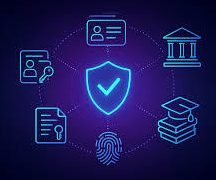

Decentralized Identity (DID) In today’s digital world, identity is everything. From logging into social media to opening bank accounts, verifying identity is central to nearly every online interaction. Yet traditional identity systems are deeply flawed — centralized databases are vulnerable to hacks, users have little control over their data, and identity theft continues to rise globally.
Decentralized Identity (DID)
Enter Decentralized Identity (DID) — a blockchain-powered system that gives individuals full control over their digital identity. In 2026, DID is rapidly emerging as one of the most transformative applications of blockchain technology.
Let’s explore how it works, why it matters, and what the future holds.
🌐 What Is Decentralized Identity (DID)?
Decentralized Identity is a system where individuals create and manage their own digital identity without relying on a centralized authority like a government database or tech corporation.
Instead of companies storing your username, password, and personal information on their servers, DID allows you to:
-
Own your identity credentials
-
Store them in a secure digital wallet
-
Share only the information required
-
Revoke access at any time
Blockchain platforms like Ethereum and Polygon are commonly used to anchor identity proofs securely without exposing private data.
🔐 The Problem with Traditional Identity Systems
Centralized identity systems create multiple vulnerabilities:
-
Data Breaches – Massive databases are attractive targets for hackers.
-
Lack of Control – Users cannot control how companies use their data.
-
Redundant Verification – Repeated KYC processes waste time and resources.
-
Privacy Concerns – Platforms collect more data than necessary.
Every time you upload ID documents to a website, you’re trusting that company to protect sensitive data — and history shows this trust is often broken.
🧠 How DID Works
DID systems operate using three core components:
1️⃣ Decentralized Identifiers
These are unique blockchain-based identifiers created and controlled by the user.
2️⃣ Verifiable Credentials
Digital documents (such as a driver’s license or degree certificate) issued by trusted institutions but stored in the user’s wallet.
3️⃣ Digital Wallets
Secure apps that hold identity credentials and allow selective sharing.
For example, if a website needs proof that you are over 18, DID allows you to confirm your age without revealing your exact birthdate or personal details.
This concept is called selective disclosure — a major leap forward in digital privacy.
🚀 Real-World Use Cases in 2026
DID is no longer theoretical. It’s actively being implemented across industries.
🏦 1. Banking & Financial Services
Financial institutions are exploring DID to streamline KYC (Know Your Customer) processes. Instead of uploading documents repeatedly, customers can share verified credentials instantly.
This reduces onboarding time, improves compliance, and enhances user experience.
🎓 2. Education & Certification
Universities are issuing blockchain-based diplomas as verifiable credentials. Employers can instantly verify qualifications without contacting institutions directly.
This eliminates fake degrees and simplifies recruitment.
✈️ 3. Travel & Border Control
Digital identity wallets can store passports and vaccination records securely. Travelers can verify identity quickly without exposing full documents.
Some governments are piloting DID-based border processing systems in 2026.
🏥 4. Healthcare
Patients can control access to medical records through decentralized identity systems. Doctors receive verified credentials while patients retain ownership.
This improves privacy and cross-border healthcare coordination.
🌍 5. Web3 & Metaverse Identity
In decentralized ecosystems, identity matters. Platforms built on networks like Solana and Ethereum allow users to log in using crypto wallets instead of email-password combinations.
DID ensures:
-
No centralized login databases
-
Reduced risk of password leaks
-
Cross-platform interoperability
Your identity travels with you across platforms.
🛡️ Benefits of Decentralized Identity
✅ User Ownership
Individuals fully control their data.
✅ Enhanced Security
No centralized database means fewer massive breach risks.
✅ Privacy Protection
Only necessary data is shared.
✅ Reduced Fraud
Cryptographic verification prevents tampering.
✅ Faster Verification
Instant digital authentication reduces paperwork.
In 2026, these benefits are becoming increasingly attractive as data protection regulations tighten worldwide.
⚠️ Challenges Facing DID
While promising, decentralized identity still faces hurdles:
-
Regulatory uncertainty in some regions
-
Standardization across platforms
-
User education and adoption barriers
-
Technical scalability
For DID to achieve mass adoption, interoperability standards must align globally.
🔮 The Future of Digital Identity
The future of identity is shifting from centralized control to personal sovereignty.
Governments, enterprises, and blockchain foundations are collaborating on global DID frameworks. As digital services expand and AI-powered fraud becomes more sophisticated, secure identity verification will become even more critical.
In the coming years, we may see:
-
Government-issued decentralized IDs
-
Integration with national digital currencies
-
Biometric-secured identity wallets
-
AI-powered identity fraud detection
The long-term vision? A world where you control your digital existence — not corporations.
📌 Final Thoughts
Decentralized Identity (DID) represents one of the most practical and impactful blockchain use cases in 2026. Unlike speculative crypto trends, DID addresses a real and urgent problem: digital identity security and privacy.
As the internet evolves toward Web3, identity systems must evolve too. Blockchain-based DID offers a powerful solution — one that prioritizes security, privacy, and user empowerment.
The future of digital identity isn’t centralized.
It’s decentralized — and it’s already beginning.


 is transforming digital identity in 2026 with blockchain technology,)