

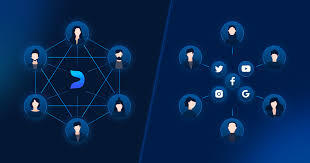

Future of Decentralized Social Media Platforms Social media has transformed how we communicate, share ideas, and build communities. Platforms like Facebook, Instagram, and Twitter (now known as X) have dominated the digital space for years. However, concerns about privacy, censorship, data misuse, and centralized control have sparked a powerful movement toward decentralized alternatives.
Future of Decentralized Social Media Platforms
The future of decentralized social media platforms looks promising as blockchain technology and Web3 innovations redefine how users interact online. Instead of corporations controlling data and algorithms, decentralized platforms empower users with ownership, transparency, and freedom.
Let’s explore what lies ahead.
What Is Decentralized Social Media?
Decentralized social media platforms operate on blockchain or distributed networks rather than centralized servers controlled by a single company. This means:
- Users control their data
- Content cannot be easily censored
- No single authority owns the network
- Revenue models are more creator-friendly
Unlike traditional platforms, decentralized networks rely on peer-to-peer systems, smart contracts, and token-based incentives to maintain operations.
Some early examples include:
- Mastodon
- Lens Protocol
- Steemit
- Bluesky
These platforms aim to challenge traditional models by giving power back to users.
Why Users Are Moving Toward Decentralization
1. Data Privacy Concerns
High-profile data scandals involving companies like Meta Platforms have raised awareness about how user data is collected and monetized. Many users now want greater transparency and control over their digital footprint.
Decentralized platforms allow users to store their data in wallets or distributed systems, reducing dependency on corporate databases.
2. Censorship Resistance
Centralized platforms often remove content based on internal policies or external pressure. While moderation is necessary, many users feel unfairly restricted.
Decentralized systems distribute authority across nodes, making it harder for a single entity to silence voices.
3. Creator Ownership & Monetization
Traditional platforms generate billions in advertising revenue, but creators receive only a fraction. Decentralized platforms introduce token-based rewards, NFTs, and direct micro-payments.
For example, creators on blockchain platforms can earn cryptocurrency directly from their audience without intermediaries taking large commissions.
This shift may redefine the creator economy by enabling:
- Direct fan-to-creator payments
- NFT-based content ownership
- Tokenized communities
- DAO-governed platforms
The Role of Blockchain and Web3
Blockchain technology is the backbone of decentralized social media. It provides:
- Transparent transaction records
- Smart contract automation
- Tokenized incentives
- Immutable content storage
Web3 identity solutions allow users to log in with crypto wallets instead of traditional email-password combinations. This creates portable digital identities that can move across platforms.
For example, Lens Protocol enables users to own their social graph — meaning followers and connections belong to the user, not the platform.
This could eliminate the “platform lock-in” problem creators face today.
Key Trends Shaping the Future
1. Tokenized Social Economies
Future decentralized platforms will likely use native tokens for governance, rewards, and content boosting. Users may vote on platform rules using governance tokens.
This creates community-owned networks rather than corporation-controlled ecosystems.
2. Interoperability Between Platforms
One of the biggest promises of decentralized social media is interoperability. Users could post content on one platform and have it automatically shared across others without losing ownership.
This is a massive shift from today’s siloed platforms.
3. AI + Decentralization
Artificial intelligence will likely combine with decentralized networks to provide content moderation, spam filtering, and personalized feeds without centralized data harvesting.
Instead of companies controlling algorithms secretly, decentralized AI models could operate transparently.
4. Decentralized Autonomous Organizations (DAOs)
Future social platforms may be governed by DAOs. Token holders could vote on:
- Content policies
- Platform updates
- Revenue distribution
- Feature development
This democratic governance model represents a major evolution from traditional tech corporations.
Challenges Ahead
While the future looks exciting, decentralized social media still faces obstacles:
Scalability Issues
Blockchain networks can struggle with high transaction volumes.
User Experience
Crypto wallets and blockchain interfaces can be complex for non-technical users.
Regulatory Uncertainty
Governments worldwide are still defining crypto and Web3 regulations, which may impact decentralized platforms.
Content Moderation
Fully censorship-resistant platforms risk misuse if moderation tools are insufficient.
To succeed, developers must balance freedom with responsibility.
Will Decentralized Social Media Replace Traditional Platforms?
In the short term, decentralized platforms may coexist with giants like YouTube and TikTok rather than replace them entirely.
However, younger generations increasingly value privacy, transparency, and ownership. As Web3 adoption grows, decentralized platforms could gradually capture significant market share.
The transition will likely be evolutionary, not revolutionary.
The Long-Term Outlook (2026 and Beyond)
By 2026 and beyond, we may see:
- Mainstream adoption of blockchain-based identities
- Creator-owned social ecosystems
- Tokenized community governance
- Interoperable Web3 platforms
- Greater digital freedom and user empowerment
The future of decentralized social media platforms is not just about technology — it’s about redefining power structures online.
Users are no longer satisfied being the product. They want to be stakeholders.
If innovation continues at its current pace, decentralized social media could become one of the most disruptive transformations of the digital age.


